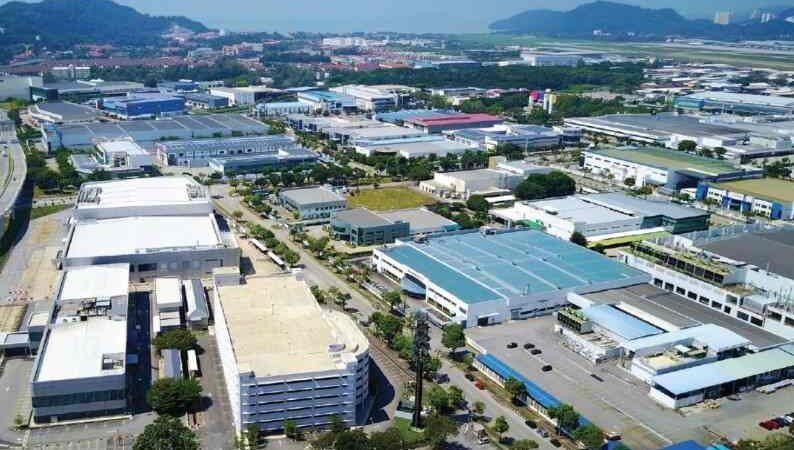
Penang has long been recognised as Malaysia’s electronics manufacturing powerhouse. While Bayan Lepas Industrial Park established the state’s reputation decades ago, a new contender has emerged on the mainland—Batu Kawan Industrial Park (BKIP).
This comprehensive guide to Batu Kawan Industrial Park by Industrial Malaysia explores why this 1,151-acre industrial zone has become one of Southeast Asia’s most sought-after manufacturing destinations. From semiconductor giants to medical device innovators, BKIP is attracting world-class companies seeking to expand their operations in a strategic, well-connected location.
Strategic Connectivity: The Gateway Advantage
BKIP’s location delivers unparalleled accessibility for businesses requiring efficient logistics and supply chain management. The industrial park sits just south of the Second Penang Bridge, a 24-kilometre span that connects the mainland directly to Penang Island. This infrastructure achievement has transformed what was once a remote area into a highly accessible manufacturing hub.
The park benefits from direct access to Lebuhraya Bandar Cassia, which links seamlessly to Malaysia’s North-South Expressway. This connectivity enables manufacturers to transport goods efficiently across the country, from Singapore in the south to Thailand in the north.
For international operations, Penang International Airport lies within easy reach, facilitating business travel and air cargo requirements. The Port of Penang, one of Malaysia’s busiest container terminals, provides maritime shipping capabilities essential for export-oriented manufacturers.
Local transportation within Batu Kawan has also been enhanced through the Congestion Alleviation Transport (CAT) system, a free transit bus service that improves workforce mobility throughout the area.
A World-Class Manufacturing Ecosystem
BKIP has attracted an impressive roster of multinational corporations and large local companies. The industrial park now houses approximately 160 companies, with a combined workforce exceeding 28,000 employees. This concentration of manufacturing excellence has created powerful synergies and established BKIP as a comprehensive industrial ecosystem.
Electronics and Semiconductor Manufacturing
The electronics sector dominates BKIP’s industrial landscape. Western Digital operates a major facility producing solid-state drives (SSDs), while semiconductor equipment manufacturer Lam Research has invested close to RM1 billion in an 800,000-square-foot manufacturing facility. The company employs over 600 people to support growing demand for wafer fabrication equipment.
Memory chip giant Micron Technology has made substantial commitments to the park. After investing RM1.5 billion in its first phase, the company is constructing an equally large second facility. Micron’s operations in BKIP focus on advanced SSD assembly and testing, with plans to employ 6,000 team members across its Malaysian operations.
Other electronics manufacturers include Broadcom, Inari, ViTrox, and Pentamaster, creating a robust supply chain and talent pool that benefits the entire sector.
Medical Device Innovation
BKIP has emerged as a significant hub for medical device manufacturing. Boston Scientific has established operations in the park, whilst diabetes management technology company DexCom has also invested in facilities there. The Penang state government’s focus on developing a medical manufacturing hub suggests continued growth in this sector.
Automotive Excellence
The automotive industry maintains a strong presence at BKIP. Boon Siew Honda became the park’s first investor in 2011, relocating to a cutting-edge factory in 2013. This joint venture between Honda Motor Co and Oriental Holdings continues to operate from the site.
Malaysian Automotive Lighting (MAL), backed by Italian and German expertise, manufactures advanced automotive lighting systems from its BKIP facility. German engineering giant Bosch also maintains operations within the park.
Supporting Industries
Beyond these primary sectors, BKIP accommodates diverse manufacturing activities. South Korea’s Simmtech, one of the world’s largest printed circuit board (PCB) manufacturers, invested more than RM500 million in its first Southeast Asian facility at BKIP. The 18-acre site commenced operations in 2023, creating 1,200 high-value engineering and manufacturing positions.
Industrial Synergies: A Connected Manufacturing Network
BKIP doesn’t operate in isolation. The industrial park benefits from proximity to several complementary manufacturing zones that strengthen Penang’s overall industrial ecosystem.
Penang Science Park, located nearby, houses over 50 companies focusing on research-intensive activities. This proximity enables technology transfer and collaborative innovation between research-focused entities and large-scale manufacturers.
Bukit Minyak Industrial Park, with more than 100 established companies, provides additional manufacturing capacity and supply chain depth. The Juru SME Industrial Area, also hosting over 100 businesses, supplies components and services to larger manufacturers throughout the region.
This clustering effect creates significant advantages. Manufacturers can source materials locally, reducing lead times and transportation costs. The concentration of industrial activity also attracts specialised service providers, from equipment maintenance companies to logistics specialists, further enhancing operational efficiency.
Beyond Manufacturing: A Comprehensive Development
The Batu Kawan Master Plan extends far beyond industrial facilities. This comprehensive vision transforms the area into a satellite town that balances industrial development with lifestyle amenities and educational institutions.
Retail and Lifestyle Integration
IKEA’s Penang store operates in Batu Kawan, whilst Design Village outlet mall provides shopping and entertainment options. These retail developments serve the growing residential population whilst attracting visitors from across Penang.
Educational Hub
Batu Kawan is establishing itself as a tertiary education centre. KDU University College has opened a campus in the area, whilst Peninsula College operates its Ship Campus there. The Walta Centre of Excellence provides specialised training that supports the industrial sector’s workforce development needs.
This integration of education and industry creates valuable pathways for graduates entering manufacturing careers. Companies benefit from access to fresh talent, whilst students gain exposure to cutting-edge manufacturing technologies and potential employers.
Residential Development
Housing projects such as Aspen Vision City and developments by EcoWorld are creating residential options for the growing workforce. This transformation into a comprehensive township reduces commuting times and improves quality of life for employees.
Government Support and Investment Climate
The success of BKIP reflects strong collaboration between federal authorities, the Penang state government, and the Penang Development Corporation (PDC). These entities have implemented investor-friendly policies that accelerate project approvals and provide attractive incentives.
The state government conducts rigorous industrial and environmental due diligence to ensure BKIP hosts only world-class technological companies. This selective approach maintains high standards whilst protecting the environment.
InvestPenang, the state’s investment promotion agency, actively markets BKIP to potential investors worldwide. The organisation provides comprehensive support throughout the investment process, from initial enquiries through to operational commencement.
Tax incentives, streamlined regulatory processes, and proactive problem-solving have earned Penang a reputation as one of Malaysia’s most business-friendly states. Companies consistently cite ease of doing business as a key factor in their investment decisions.
Workforce Excellence: Penang’s Competitive Edge
Access to skilled labour represents one of BKIP’s most compelling advantages. Penang has cultivated a reputation for manufacturing excellence over decades, creating a deep talent pool with expertise in electronics, precision engineering, and automated manufacturing.
The state’s workforce is characterised by strong technical capabilities, with many employees holding engineering degrees or technical certifications. English proficiency is widespread, facilitating communication in multinational environments and enabling companies to integrate their Malaysian operations seamlessly into global networks.
Educational institutions throughout Penang produce thousands of engineering and technical graduates annually. This steady talent pipeline ensures companies can recruit skilled employees without extensive relocation programmes.
Soon K Kuek, general manager of Lam Research International, emphasises this point: “Malaysia has established a reputation as a preferred location for the semiconductor and electrical and electronics industries. This is especially true for Penang, which has an already-robust ecosystem and is a regional hub for back-end hi-tech machinery and equipment.”
Future Outlook: Sustained Growth Trajectory
BKIP’s development shows no signs of slowing. Multiple companies have announced expansion plans, with Micron’s second phase and various other investments worth billions of ringgit currently under construction.
The industrial park is expected to continue attracting investment in electronics, medical devices, and advanced manufacturing. As global supply chains diversify and companies seek alternatives to concentrated manufacturing locations, Malaysia’s combination of political stability, skilled workforce, and strategic location becomes increasingly attractive.
The transformation of Batu Kawan into a comprehensive township will accelerate as residential developments mature and lifestyle amenities expand. This evolution will further enhance the area’s appeal to both companies and employees.
Penang’s limitations regarding available land on the island ensure that BKIP will play an increasingly central role in the state’s industrial future. As Chew Ne Weng, managing director of QES, predicts: “Batu Kawan will eventually overtake Bayan Lepas, as the former’s land area is much larger.”
Malaysia’s Manufacturing Renaissance
Batu Kawan Industrial Park exemplifies Malaysia’s evolution as a manufacturing destination. From its early days with a single investor to its current status as a world-class industrial hub, BKIP demonstrates what strategic planning, government support, and private sector investment can achieve.
The park’s success offers lessons for other developing regions seeking to attract high-value manufacturing. Critical factors include infrastructure investment, workforce development, regulatory efficiency, and the creation of industrial ecosystems where companies can access suppliers, services, and talent efficiently.
For companies considering Asian manufacturing locations, BKIP presents a compelling proposition. Strategic connectivity, a skilled workforce, competitive costs, and strong government support combine to create an environment where businesses can thrive.
The ongoing transformation of Batu Kawan from industrial park to integrated township represents the future of sustainable industrial development—balancing economic growth with quality of life, and creating communities where people don’t just work, but genuinely want to live.